
🌍 This page is also available in Italian → [Italian version]
Sardinian recipes:
Cured meats
Ancient family recipes
Salami, sausage, pancetta, loin and coppa
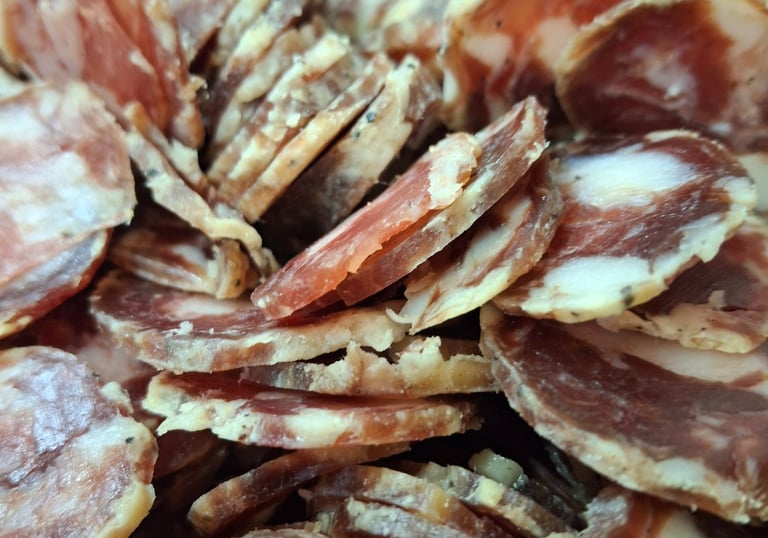
SALAMI
The parts used are: lean meat, shoulder, throat fat, pancetta. The proportion of lean (70%) and fat (30%) is very important. For the lean part, use shoulder, coppa and leg. For the fat part, use pancetta. Remove the small tendons and prepare the pieces to be minced. The fat can be cut into cubes with a knife.
Out of 10 kg of meat, 7 are lean and 3 are fat.
Mince the lean meat with the mincer and set it aside. Do the same with the fat. Weigh and check the percentages, then season the mixture.
Mix together all the minced meat obtained.
Prepare the seasoning (For 10 kg of mixture):
260–280 g of salt
28 g of black pepper
30 g of garlic
red wine (for 10 kg, 1 glass of wine)
Let the mixture rest for 12 hours.
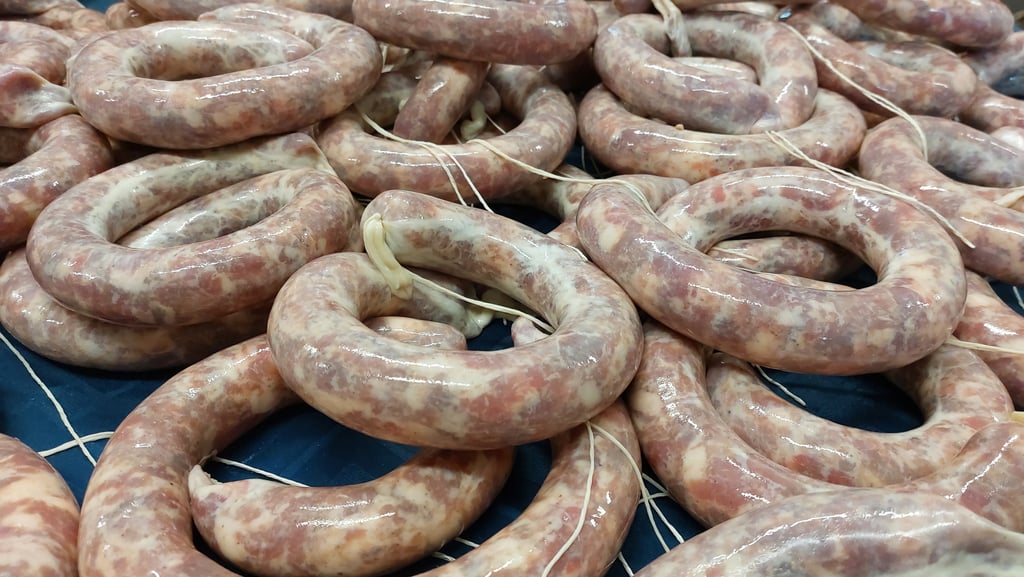
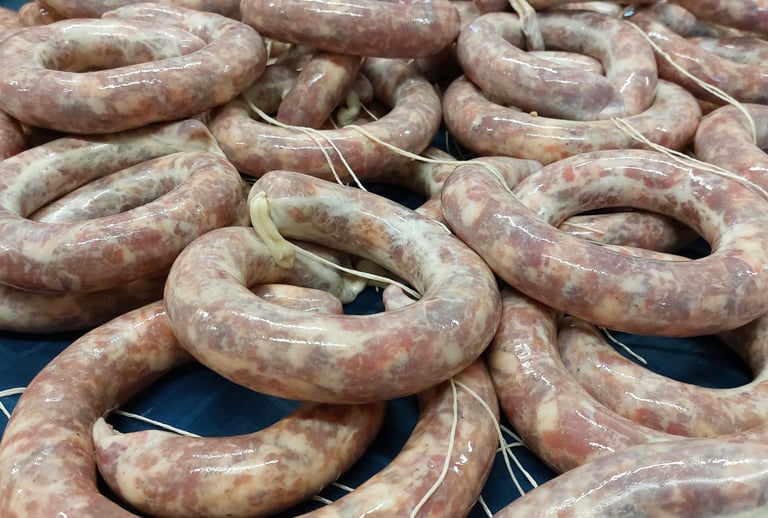
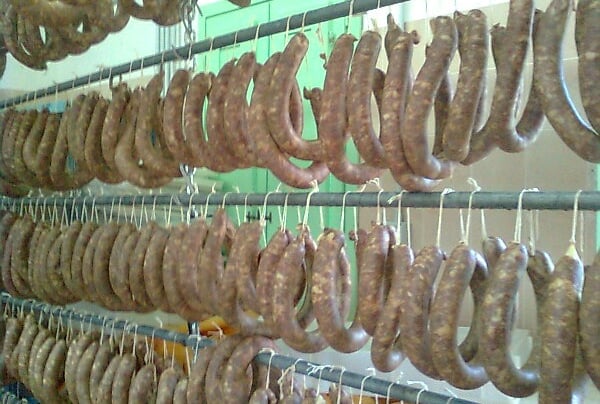
Stuff into casings.
SAUSAGE
Preparation similar to salami with some differences: use 60% lean, 40% fat.
The parts of the pig used are: lean meat, shoulder, pancetta. For the lean part, use shoulder, leg and coppa; for the fat part, pancetta. Remove the small tendons and prepare the pieces to be minced.
Out of 10 kg of meat, 6 are lean and 4 are fat (pancetta).
Mince the lean meat with the mincer and set it aside. Do the same with the fat. Weigh and check the percentages, then season the mixture.
Mix together all the minced meat obtained.
Prepare the seasoning (For 10 kg of mixture):
240–260 g of salt
28 g of black pepper (part ground, part whole)
30 g of garlic
white wine (for 10 kg, 1 glass of wine)
Let the mixture rest for 12 hours.
Stuff into casings.
FLAT PANCETTA, LOIN, COPPA
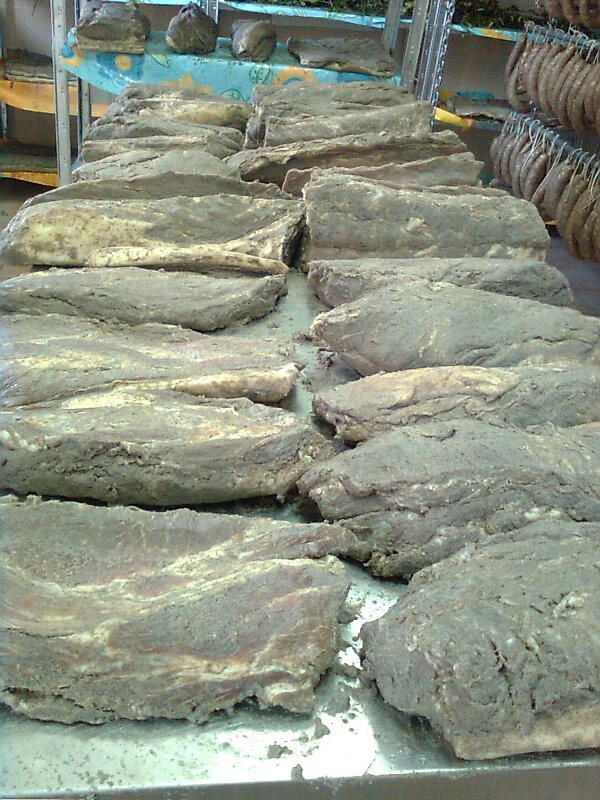
The pieces must rest hanging in a cool place for one night. They are then trimmed and salted.
Method and seasoning quantities (For 10 kg of mixture):
300 g fine (sea) salt
30 g black pepper
40 g garlic
white wine: 1 glass
various herbs (rosemary, bay, myrtle, juniper berries) to taste
Rub and massage the piece all over.
Leave the piece to rest in a cool place for 7 days on a sloping surface so that the liquids can drain off.
Once the liquids have been lost, add another handful of salt, pepper and herbs and massage.
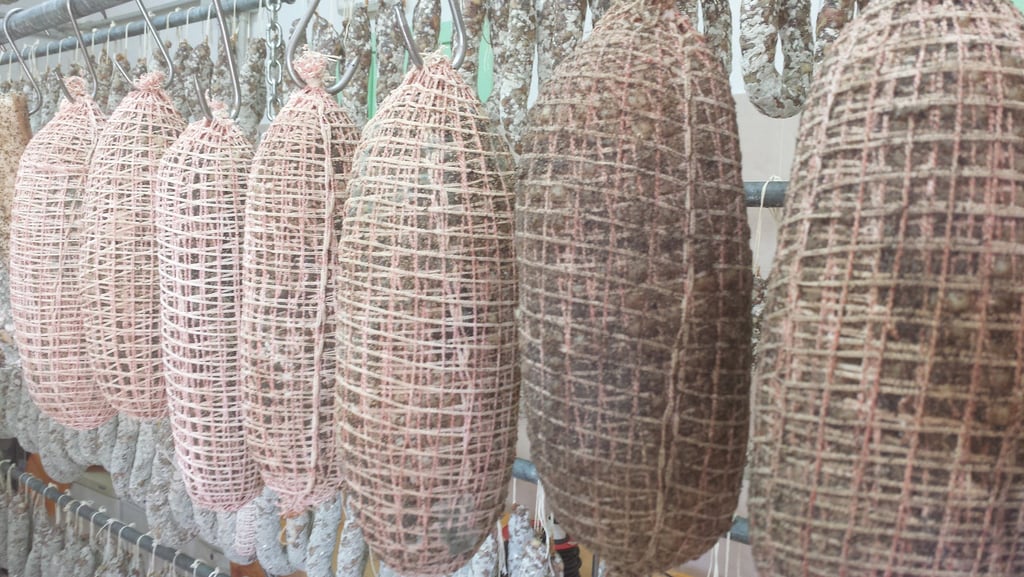
Leave to rest for 3 hours. Dry the piece, stuff into casing and hang.
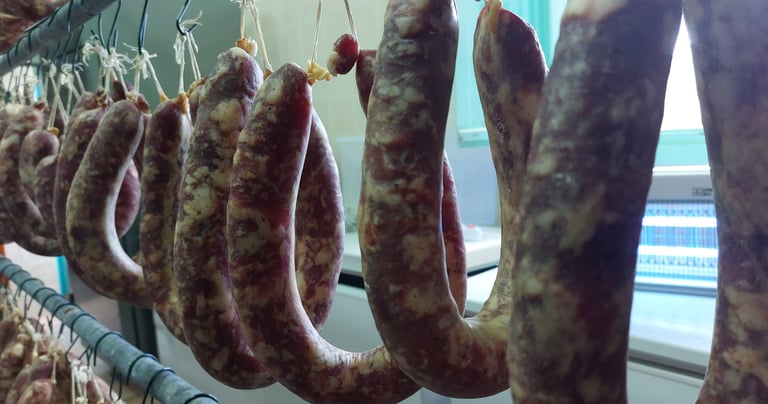
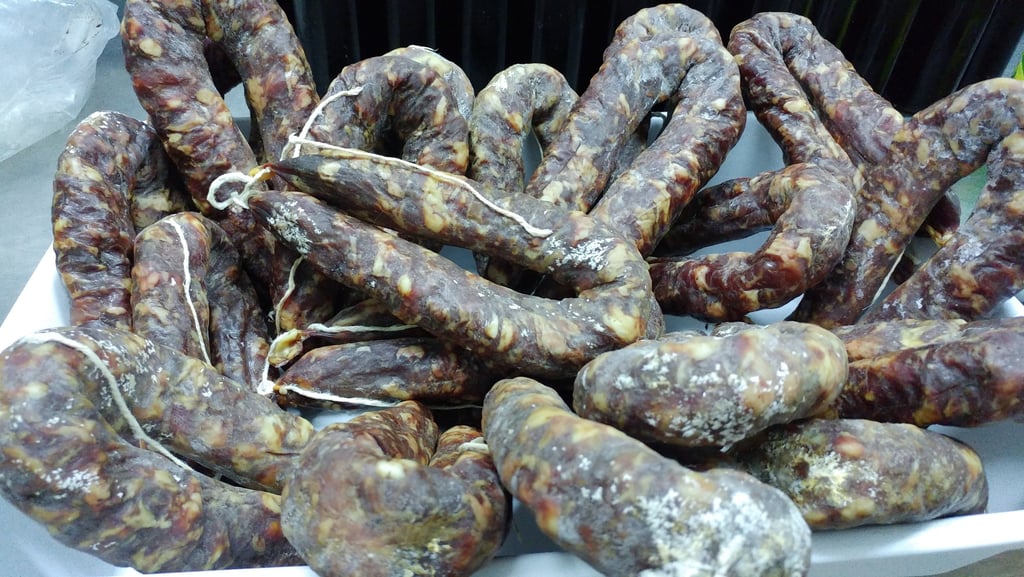
The curing
This is one of the most important and delicate phases in the preparation of cured meats.
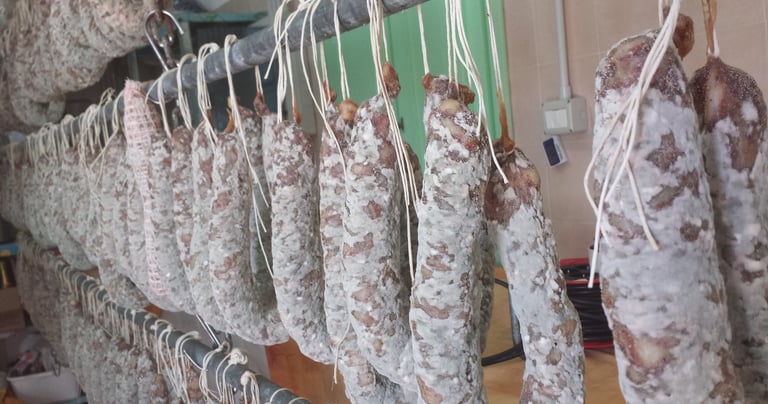
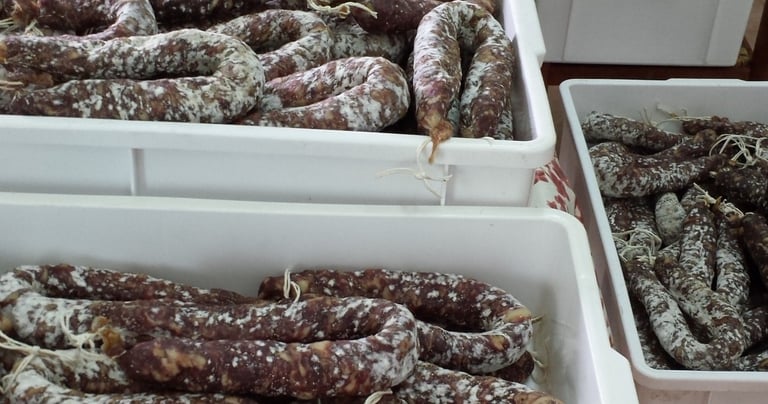
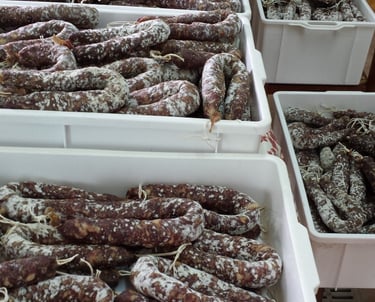
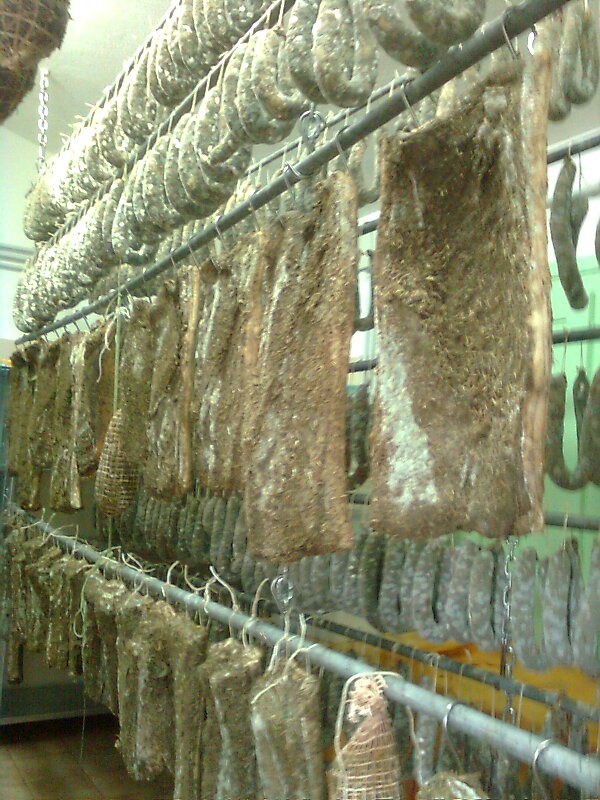
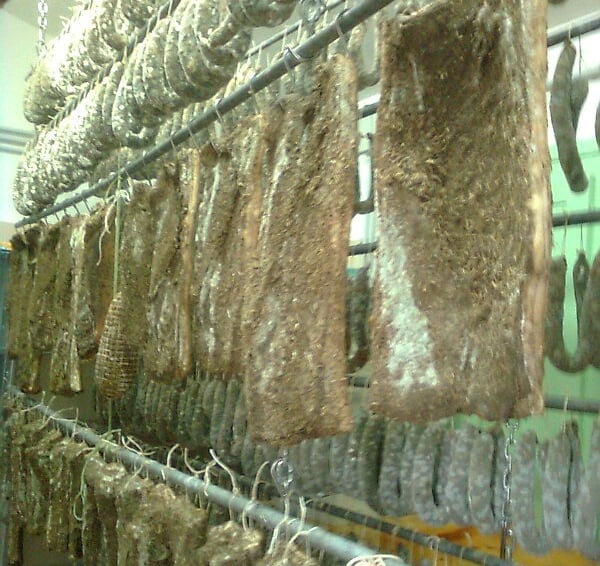
The moulds that form are very important for maintaining humidity, for maturation and for flavour, but they must not be black. Draughts are to be avoided.
As curing progresses, it may be necessary to wet the floor to keep the correct level of humidity. Always check the humidity and temperature of the room. If the moulds are too abundant they can be brushed off with a brush.
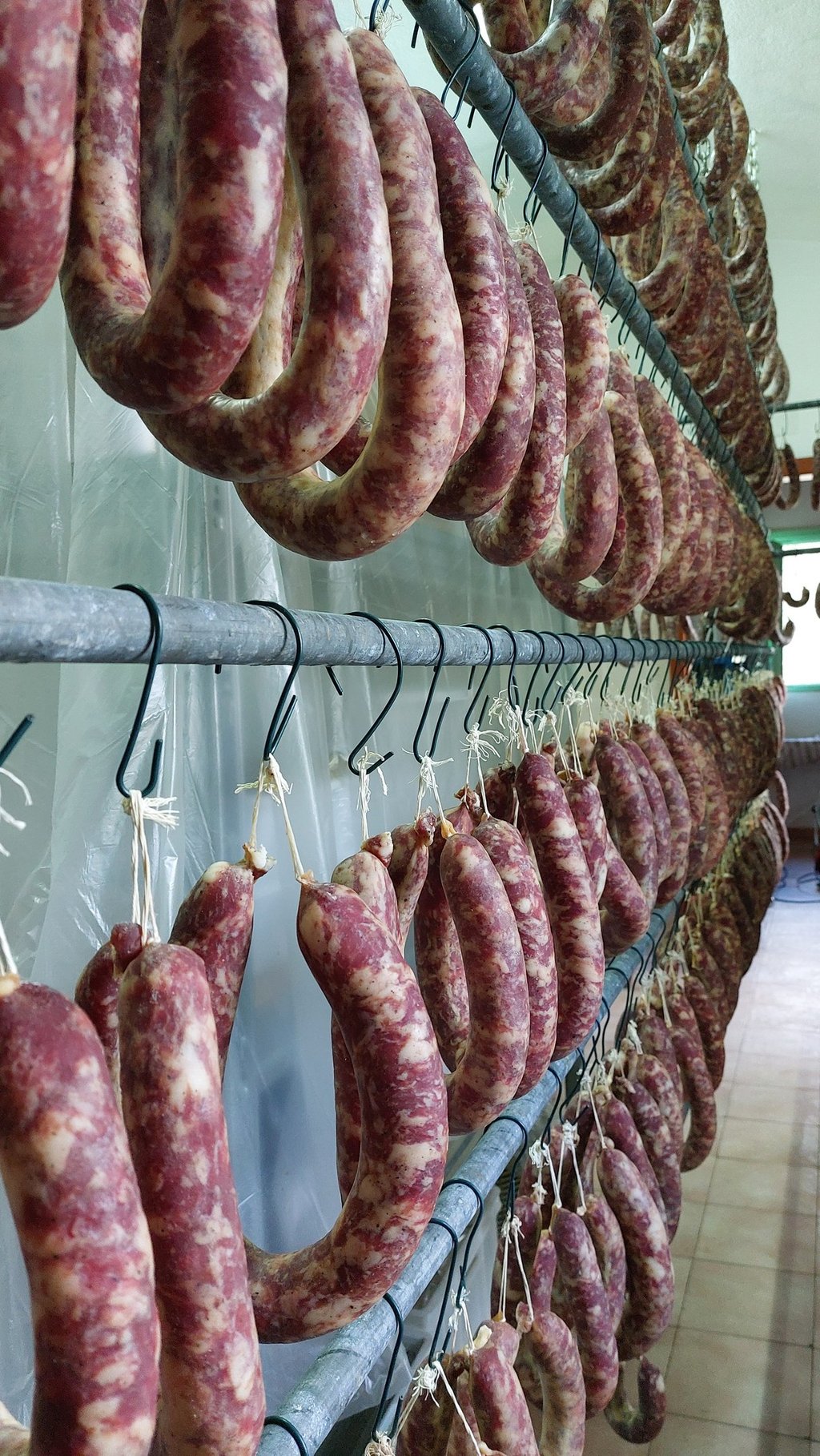
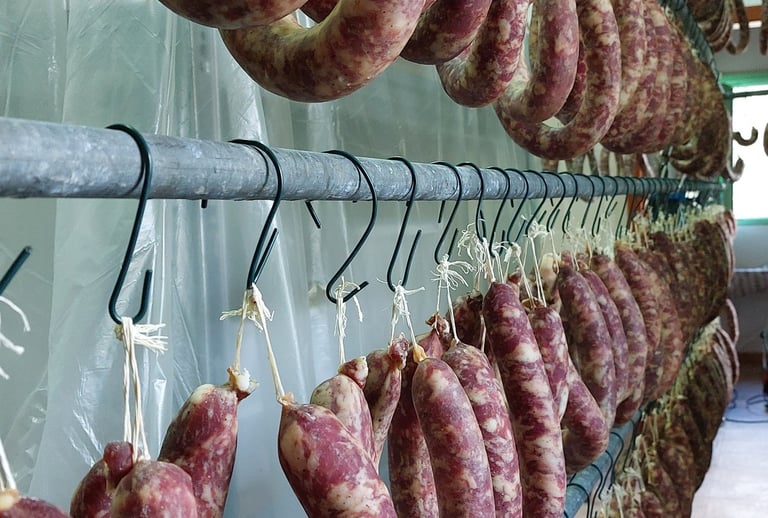
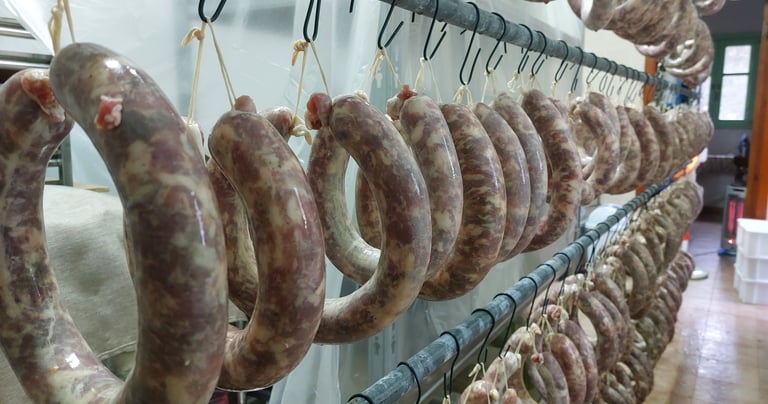
The curing process consists of three different phases: warming (stufatura), drying and maturing.
During the first phase, which can last from one to four days depending on the size of the sausage, the first major loss of water occurs, with a consequent decrease in weight. In the room where this process takes place, the temperature is about 20–22°C.
With drying, which lasts between 7 and 8 days, the loss of water must be as even as possible throughout the thickness of the mixture so as to avoid the casing hardening. In this phase too, which takes place in ventilated rooms, the temperature must be carefully controlled (maximum 18°C with humidity of 75–80%).
The cured meats must “breathe” without drying too quickly, and air exchange in the rooms is of fundamental importance; in this way the seasonings penetrate every part, distributing themselves evenly throughout the mixture.
The third and final phase, actual curing, is the longest of all and depends on the type and size of the sausage. This process takes place in a cellar, at 10–12°C with humidity of 60%. It is important to remember that the choice of curing rooms is fundamental for obtaining a good product.
Since the natural casing is a “breathing” wrapping, it can allow the passage of odours from the curing and storage places. It therefore becomes essential to choose “neutral” rooms, protected from odours or fragrances that are too strong, which would then systematically be found in the salami on the table.
Ensure constant ventilation, for a gentle renewal of the air, absolutely avoiding draughts. Under the salamis (on the floor) you can pour water to maintain the right humidity. This sudden increase in humidity serves to trigger the growth of moulds, then the microclimate is allowed to stabilise around 10–12 degrees with relative humidity around 60%.
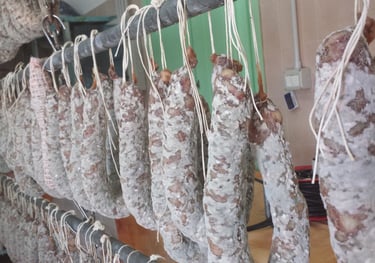
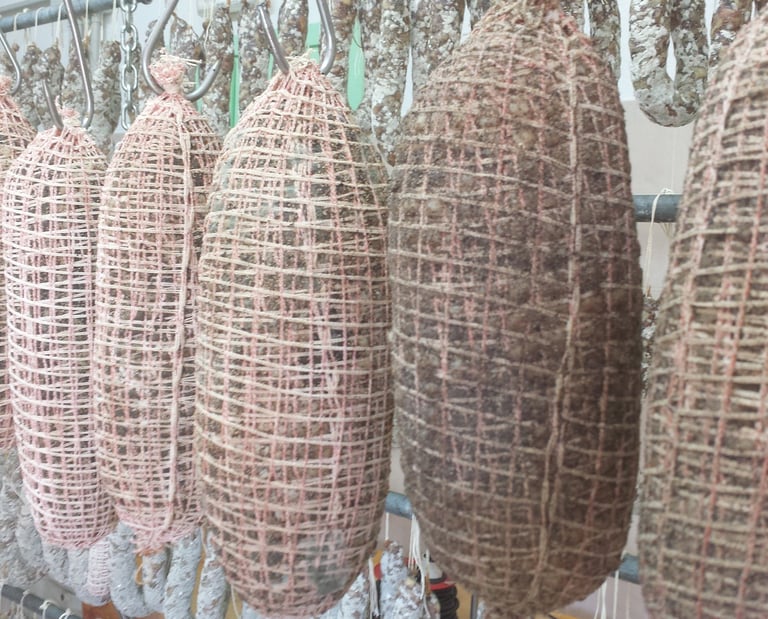
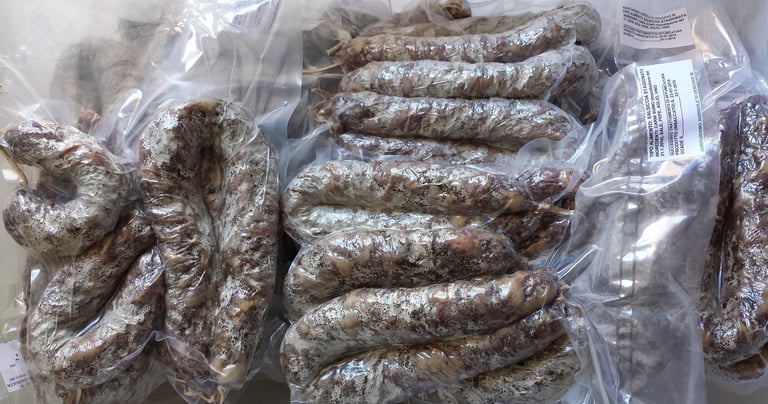
Gradually the cured meats are covered with “good” moulds that will contribute to their maturation.
Sardinian and Gallurese recipes
Collection of some typical recipes from our cuisine
You are on the page Recipes:
Sardinian cured meat
Frequently Asked Questions
FAQ Restaurant | FAQ Rooms
Find out if Agrisole is the right choice for you
Contact Us
Official Website of Agriturismo Agrisole di Derosas Monica
via Sole Ruju, 7 07026 Olbia (SS)
P.I 01770480901
CIN IT090047B5000A0126
⚠️ For safety reasons, it is forbidden to bring pyrotechnic candles, fireworks or other objects that may cause harm to people, animals or property onto the premises